 België (nl)
Fermented Chinese cabbage
This recipe is from Christian Weij from his book Verrot Lekker (51115980).In China, they make their own version of sauerkraut from this cabbage. They blanch the whole cabbage and then let it dry in the sun. After drying, the cabbage is mixed with salt and further processed as we do with our sauerkraut. Because the cabbages are fermented whole, you can also use the soured leaves well for stuffing.
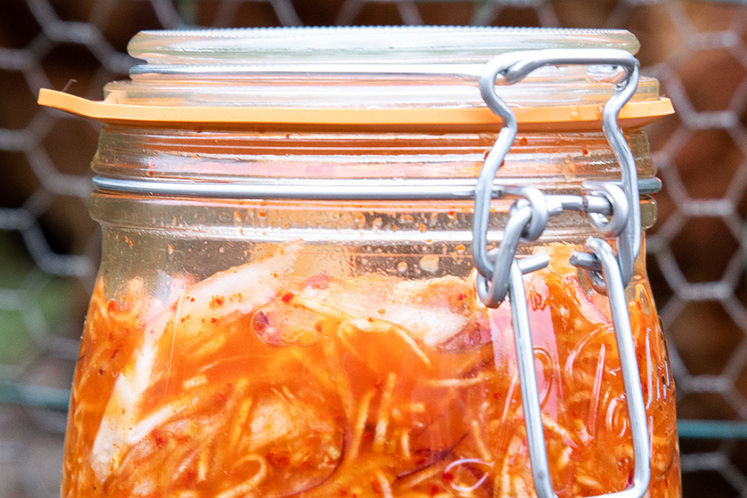
The kimchi of Christian Weij
Kimchi is the national dish of Korea and is eaten with everything. Delicious in a wrap, with rice dishes, or very Western: on a hamburger bun. This recipe gives a European twist to the dish. It is less spicy and tastes heavenly on a crispy baguette with sausage. Delicious! Want it spicier? Then add more sambal.
Ingredients
200mlWater
200gRadish
1.2000000000000002kgChinese cabbage
4units.eetlepelFish sauce
2Shallots
1units.theelepelgrated ginger
6Garlic cloves
200gCarrot
1units.eetlepelBrown sugar
4spring onions
50gSea salt
1units.theelepelSambal
2-liter clamp jar
1Red bell pepper
4anchovies
1can of tomato paste
1units.eetlepelCornstarch
Preparation
- Attach the rubber ring to the lid of the jar.
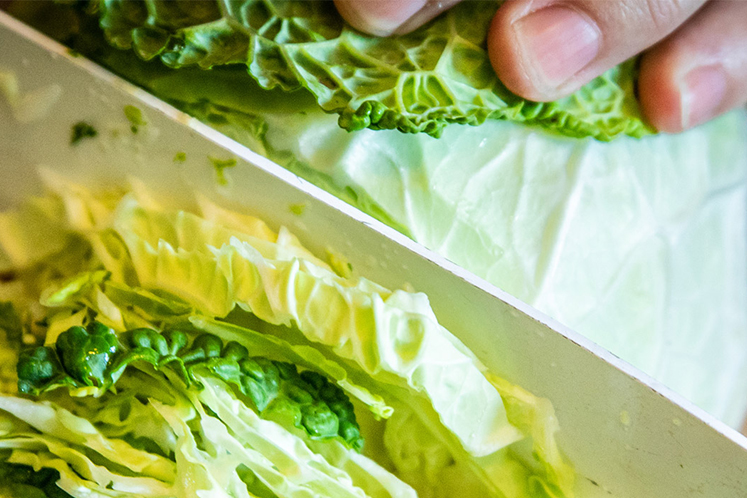
- Separate the cabbage leaves and rinse them with cold water.
- Sprinkle the salt between the cabbage leaves and rub it in well. Place the leaves in a large container.
- Let the leaves sit for 2 hours and then rinse them thoroughly with cold water. The leaves have now absorbed enough salt to allow safe fermentation.
- Meanwhile, bring the water to a boil and mix in the cornstarch. Simmer this mixture gently for about five minutes. Add the sugar and let it cook for another minute.
- Let the cornstarch mixture cool completely.
- Peel the shallots and garlic and chop them finely.
- Slice the spring onion, including the green part, into rings.
- Finely chop the radish, carrot, and bell pepper (matchstick thickness).
- Puree the ginger, fish sauce, tomato paste, sambal, and anchovies with a hand blender and mix this into the cornstarch mixture.
- Stir the finely chopped vegetables into the spicy cornstarch mixture and spread this onto the cabbage leaves.
- Roll up the leaves and put them in the jar with a clamp lid.
- Press the air out from between the leaves by placing something heavy on top. For example, a freezer bag with salt water or a special sauerkraut stone (see the glossary on page xxx for an explanation about sauerkraut stones).
- Seal the jar airtight so that mold cannot form.
- Place the jar on the counter and let the kimchi ferment at room temperature.
- Taste after 3 days to see if the kimchi is sour. If it is not yet sour, or if you want it more sour, leave the jar at room temperature for a few more days until you like the taste.
- Place the jar in the refrigerator to (almost) stop the fermentation.